Posts

Paper coated with silver nanoflower composite, a dual substrate for SERS and PS-MS

Image
Recently a novel dual substrate for both SERS and PS-MS based on the deposition of silver nanoflowers (AgNFs) onto a paper-based analytical device (PAD) has been developed. Although the obtention of the substrate requires several steps, it is possible to synthesize a bunch of them at the same time. Figure 1 illustrates the different stages involved in the synthesis process of the so-called ny-AgNF PADs (further details are included in the full article). To obtain the silver nanoflowers, an already described protocol was followed, which is based on a simple reaction involving silver nitrate and ascorbic acid as the reducing agent (Figure 1, steps 4-7). Furthermore, previous modification of the paper was needed to anchor the nanoflowers to its surface (Figure 1, steps 1-3, and 8). First, a coating of nylon-6 was needed to assure the surface availability of the analytes in Surface-enhanced Raman spectroscopy ( SERS). Next, a surface of metallic silver was acquired by the deposition of ...

Polyacrylamide gel in electromembrane extraction

Image
Electromembrane extraction (EME) is a liquid phase microextraction technique based on the voltage-assisted migration of the target analytes between two aqueous solutions (the sample and the acceptor phase) separated by a polymeric membrane where an organic solvent is immobilized in the form of a supported liquid membrane (SLM). The technique, which has been the subject of several posts in this blog, allows the rapid extraction of ionic species. The present post highlights a recent article, published in the Journal of Pharmaceutical and Biomedical Analysis, where polyacrylamide gels are proposed as a membrane in EME. Although polypropylene membranes are usually selected as a physical barrier between the two aqueous phases involved in EME, several research groups have proposed alternatives to this classical approach. In 2017, Tabani et al. proposed agarose gel as a greener alternative. Although good results were obtained, the large pore sizes of these gels (up to 300 nm) ...

Dendrimeric nanocomposites for solid phase microextraction

Image
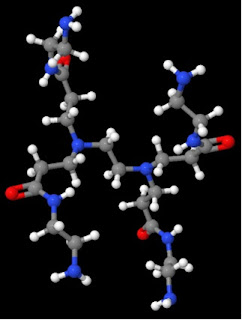
Polymeric nanocomposites have demonstrated great potential as sorbents in analytical sample preparation. The polymeric domain usually provides the sorption ability while the nanometric element confers special properties (like magnetism) or improves the sorptive capacity introducing new interaction chemistries (different than those provided by the polymer) or increasing the superficial area of the nanocomposite. In a recent article published in Microchimica Acta by Prof. Bagheri and coworkers, a reference research group in this field, have outlined the use of dendrimeric nanocomposites as sorptive phases in solid-phase microextraction (SPME). Dendrimers are hyperbranched molecules with a multifunctional, homogeneous and spherical surface. They present multiple sites on the outer surface that may interact with the target analytes. PAMAM dendrimer ethylene diamine core, generation 0.  Source: chemspider.com Polyamidoamine (PAMAM) dendrimers can be obtained by a controlled an...

Polysulfone and MIPs coated over nickel foam

Image
Microextraction is currently present in many analytical processes. Its advantages over conventional extraction approaches have been extensively pointed out and mainly refer to its simplicity and miniaturization while providing equal or even better analytical features. Also, the availability of the sorbents (carbon-based, silica, metallic, magnetic...), formats (fiber, capillary, powder, particles and membranes) and combinations among them make possible the processing of any sample-analyte binomial. A step forward in the development of novel sorbents phases is selectivity. Highly selective extractant allows to face the determination of the analytes in complex matrices such as biological fluids or food. Nickel foam The group of Prof. Zhang has proposed the synthesis and evaluation of molecularly imprinted polymers (MIPs) that allows the selective extraction of floxacin from water and biological samples. We are all aware about the ability of such polymeric phases to selective rec...

Animal bones wastes for coiled solid phase microextraction

Image
The use of natural products, or wastes from them, to fabricate sorptive phases is an interesting research line with green connotations. Ramzi and Farrokhzadeh have evaluated, in a recent article accepted for publication in Journal of Separations Science, the potential use of animal bone wastes in this context. From the chemical point of view, bones are inorganic/organic composite materials where the inorganic part is mainly composed by carbonated hydroxyapatite while collagen fibers comprise the main part, up to 90 %, of the organic material. "Electronic micrograph 10000 magnification of mineralized collagen fibers in bone" by Bertazzo S used under CC BY . Via wikipedia The proposed procedure for the fabrication of the coating is simple. Bone wastes are firstly grounded, cleaned and dried. The resulting solid is dispersed in a citric acid solution and heated for a defined period o time. Finally, the solid phase microextraction (SPME) support is immersed into the solu...

Direct coupling of Solid Phase Microextraction to Mass Spectrometry: via liquid desorption

Image
The direct coupling of SPME with Mass Spectrometry (MS) analyzers has been investigated for more than 20 years. In fact, different strategies have been developed by several groups worldwide and most have been appropriately reviewed by Fang et al 1 and  Deng et al 2 . Given the wide diversity of SPME-MS couplings, it is difficult to categorize them based on one well-defined characteristic. Following a similar approach to the one suggested by Venter et al 3 , one could classify SPME-MS couplings according to the desorption mechanism: solvent 4,5 , thermal 6,7 or laser desorption 8 . Herein, I present a brief summary of the most recent developments on SPME-MS techniques that utilize liquid desorption. Essentially, this field can be divided in three sub-categories: direct-desorption from the extraction substrate 9–11 , desorption into an elution chamber 12 , or desorption into a smaller compartment with efficient ionization (nano-electrospray emitter) 5,13 . As the first category ...